


Inflammation of the prostate - prostatitis - is increasingly common in men of reproductive age, i.e. from 20 to 50 years.Just a few years ago, this disease was more often attributed to men over 60. The reason for this change, of course, is the spread of factors that depress the body.
Thus, today this insidious disease has become a real problem in modern urology: patients, not knowing the consequences, prefer to keep silent about their ill health.However, this frivolity can lead to such sad consequences as irreversible infertility and inflammatory processes in many organs.
Prostatitis occurs due to the occurrence of a bacterial infection, the pathogens of which enter the prostate in different ways - ascending (through the urethra), descending (from the bladder), lymphogenic and hematogenous (due to inflammation of other organs - sinusitis, anal fissures, hemorrhoids and even caries).However, apart from the infection itself, there are a number of factors that trigger the inflammation of the prostate gland.
Hypothermia, weakened immunity, hormonal disorders, damage to the urinary system, sexually transmitted diseases, irregular sex life and passive lifestyle contribute to the development of the disease.There are two types of prostatitis - acute and chronic, each of which requires both general and individual approaches to treatment.
Treatment
The treatment of the disease results in the elimination of the stagnant or inflammatory process in the prostate gland.But in order to finally deal with this disease, it is necessary to first rule out the cause of its occurrence, and then treat the disease itself.
Diagnostics - a swab from the urethra to determine if there are viruses, protozoa or bacteria in the gland.If any is detected, then for a bacterial infection, antibacterial treatment (antibiotic therapy) will be needed, and for a viral etiology - preparations of interferon or gamma globulin.Depending on the extent of the damage, it becomes clear how long this stage of treatment will last.
Medicines - you can't do without them
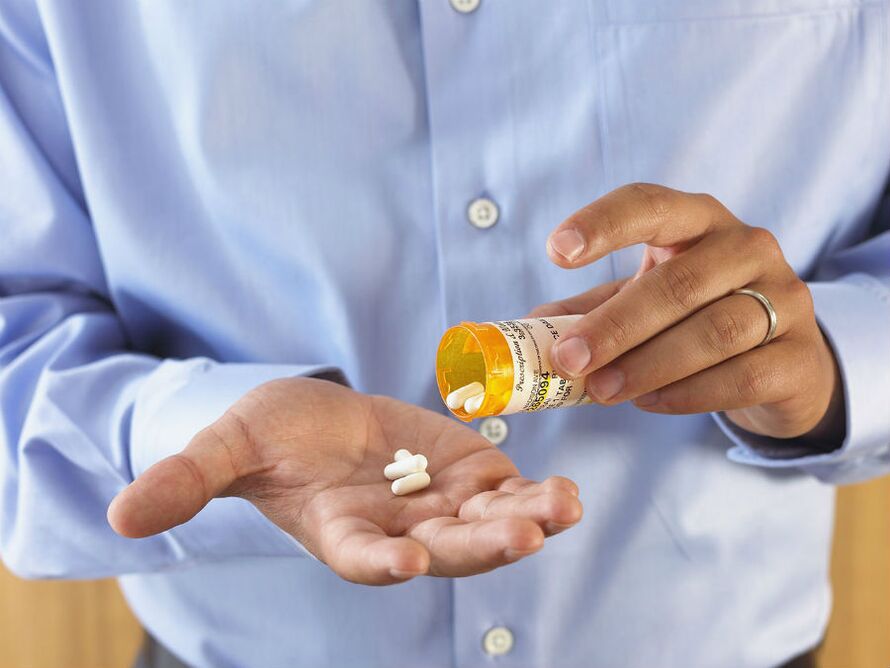
First you need to make sure that the process is infectious.If so, drugs in this class are essential.In addition, they are almost always prescribed for chronic prostatitis, even if no obvious signs of infection are detected.
The best option would be to first take a swab from the urethra and check it for the sensitivity of bacteria to antibiotics - this will make it possible to choose the most effective drug.
Antibacterial therapy is carried out by a group of fluoroquinolone antibiotics.This is due to the fact that this type of antibiotic penetrates well into the tissue of the prostate gland, unlike antibiotics of the penicillin, cephalosporin and macrolide series.
Antibiotic treatment can last quite a long time - up to three months.However, do not forget that reckless use of antibiotics has not benefited anyone - be sure to consult a specialist to advise you on which drug you need.
Note to the patient - many drugs of this class have a depressant effect on sperm, but this only happens during treatment!You don't need to worry about this - after a few months, the fertilizing ability of the sperm is fully restored.
Along with antibiotics, it is recommended to prescribe antifungal drugs, since antibiotics act only on bacteria, and against a background of reduced immunity, a predisposition to fungal (that is, fungal) diseases appears.
It is also possible to prescribe alpha blockers, which suppress pain and relieve spasm from the gland by relaxing the smooth muscles of the bladder neck and prostate.
Along with antibiotic treatment, the man is prescribed prostate massage - the procedure is quite uncomfortable and painful, but absolutely necessary for the treatment of prostatitis.The doctor will also prescribe general strengthening drugs that resolve stagnant processes and increase the body's immunity.
The patient himself will have to do a lot - for the treatment to go faster, to ensure a better blood supply, the patient must lead an active lifestyle - move more, sit or lie less.
For comprehensive effective treatment of prostatitis, a man will probably be prescribed additional drugs containing natural ingredients.These drugs significantly improve the prognosis of treatment.
Let's repeat - taking these drugs does not exclude all the above stages of treatment, but only complements them.In no case can you replace taking an antibiotic with any herbal tincture - they have completely different directions of action.Let's look at the most common herbal remedies that help treat prostatitis.
In the modern pharmaceutical market, drugs for both chronic and acute prostatitis are widely represented.However, we must not forget here that the choice of drugs is a purely individual matter, and before you start taking any drugs yourself, you must consult a urologist.After all, sometimes self-medication can do much more harm than good.
Carelessness is the enemy of health
What will happen if the disease is left to chance?If a man is "lucky enough" to get an acute form of prostatitis, it is extremely important to consult a doctor at the first symptoms - this will help you deal with the disease much faster and more effectively.
If the pathology progresses to the chronic stage, long-term remissions are possible, during which the patient will temporarily cease to be bothered by pain in the groin during urination, the body temperature will not differ much from normal, and the man can decide that sexual function has also been restored.
However, during this "deceptive euphoria", the inflammatory process originating from the prostate gland penetrates deeper into all human organs.In addition, remissions are replaced by intense exacerbations, the symptoms of which are much more intense than the previous ones.
Carelessness in relation to one's own health can lead to many unpleasant complications - abscesses, loss of potency, infertility.In addition, infertility in advanced stages of inflammation of the prostate gland can rarely be treated.
Attention!Do not attempt to self-medicate.Consultation with a doctor and examination at a clinic is required.